
If you've ever searched for help with your dog, you've probably run into both options: a local pet trainer and a K9 training academy. On the surface, they might seem like different names for the same thing. They're not. The distinction matters more than most dog owners realize, especially when you're looking for results that actually stick.
Understanding what separates the two can help you make a smarter decision for your dog and avoid spending time and money on training that doesn't hold up once you get home.
A pet trainer is usually a solo practitioner who works with dogs one-on-one or in small group classes. They often focus on basic obedience commands like sit, stay, and come, and many do a perfectly fine job for dogs with straightforward needs. Sessions tend to be casual, flexible, and relatively affordable.
The challenge is consistency. When training is delivered by a single person without a standardized curriculum, the approach can vary from session to session. There's also typically no formal progression, meaning your dog learns a skill in one context but may not be tested or reinforced across different environments or distraction levels.
Pet trainers don't always have a structured method for building on foundational skills over time. A dog might learn to sit reliably in a quiet living room but fall apart at the park or when guests come to the door. Without a deliberate, layered training process, those gaps tend to show up exactly when you need the behavior most.
This isn't a knock on every individual trainer. Some are excellent. But the structure itself is often missing, and structure is what produces reliable, long-term behavior.
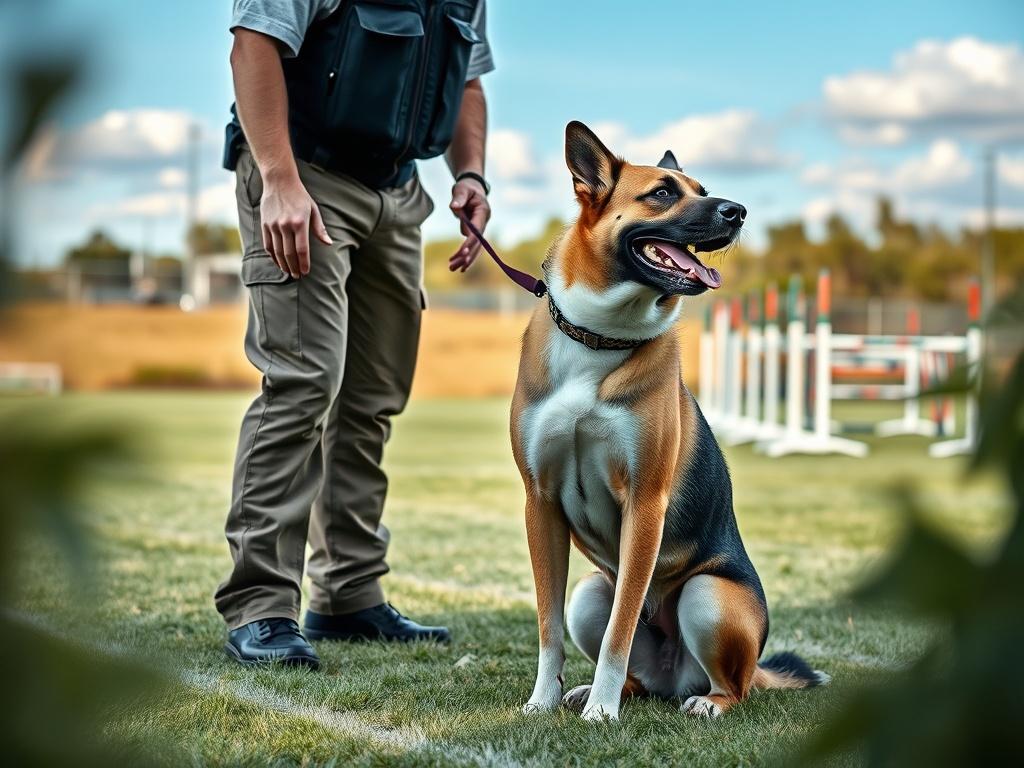
A K9 training academy operates with a defined training philosophy, a structured curriculum, and a team of handlers or trainers who work within a consistent system. The goal isn't just to teach your dog a handful of commands. It's to build a dog that responds reliably across a wide range of situations.
The academy model is built around progression. Dogs move through levels of difficulty in a deliberate sequence, with each stage building on what came before. That kind of scaffolding produces a different result than ad hoc sessions because it reflects how dogs actually learn.
One of the clearest advantages of the academy model is accountability. When there's a curriculum, there are benchmarks. You can see where your dog is in the training process, what's been mastered, and what still needs work. That transparency is rarely part of a casual training arrangement.
It also means that if something isn't working, the system has a built-in way to diagnose and address it rather than just trying something different and hoping for better results.
K9 academies typically expose dogs to a variety of environments, distractions, and scenarios as part of the training process. This is called proofing, and it's one of the most important things a training program can do. A dog that only performs in one setting isn't truly trained.
By deliberately working through different conditions, a K9 academy prepares dogs for the unpredictability of real life. That's the difference between a dog that sits when you ask at home and one that holds a stay while kids are running past at a baseball game.
The biggest reason dogs lose their training is that the training was never fully established in the first place. Owners often leave casual programs with a dog that knows the right answer in familiar conditions but hasn't been prepared for anything outside of them.
Structured academy training addresses this directly by building reliability before advancing to the next level. It also includes owner education, because even a well-trained dog will backslide if the owner doesn't know how to maintain and reinforce what's been taught. The two pieces have to work together.
At Russell's K9 Academy, we believe every dog deserves training that actually works in the real world, not just in a controlled setting. Our team uses a structured, proven approach that builds reliable behavior from the ground up and prepares both dogs and their owners for long-term success.
If you're ready to stop guessing and start seeing real results, reach out to our team today. We'd love to learn more about your dog and find the right program to fit your goals.
Stay updated on our news and events! Sign up to receive our newsletter.